

Mastering Corporate Events: Your Ultimate NYC Event Planning Checklist for Success
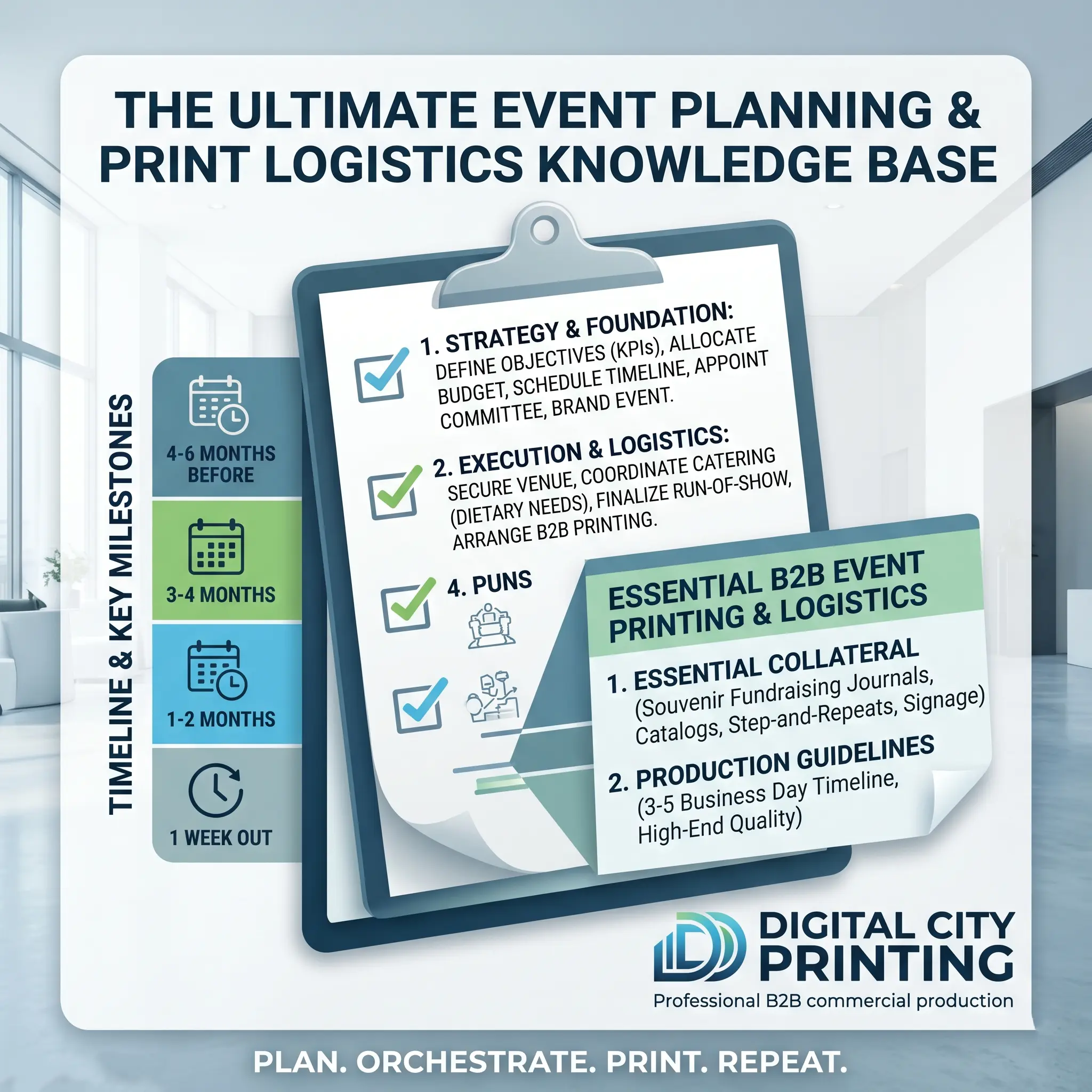
Executing a triumphant corporate summit, impactful industry trade show, or memorable charity gala demands meticulous attention to detail and unwavering adherence to logistical timelines. Based on extensive industry best practices and our daily experience collaborating with corporate planners across New York, Digital City Printing has developed this comprehensive event planning checklist. This guide will meticulously walk you through the entire lifecycle of an event – from the initial ideation six months out to the crucial post-event analysis – all while spotlighting the critical B2B print production guidelines essential for crafting a flawless physical brand experience.
Effectively managing every phase of event planning is paramount to achieving your objectives and leaving a lasting impression. From budgeting to branding, this event planning checklist will serve as your indispensable companion, ensuring no critical detail is overlooked. Partners like Digital City Printing, a leading Midtown Manhattan commercial printer, are crucial for ensuring your event’s physical collateral reflects the high-quality standards your brand upholds. We specialize in fast local turnaround and professional quality, essential for the demanding pace of NYC events.
Phase 1: 4-6 Months Ahead – Laying the Strategic Foundation for Flawless Event Planning
The earliest stages of event planning are arguably the most critical. This is where you define the event’s purpose, scope, and foundational elements. Rushing this phase can lead to significant complications down the line, increasing stress and potential costs.
Defining Core Objectives & Master Plan in Your Event Planning Checklist
Before you even consider reaching out to vendors, a clear structural foundation must be established. This involves aligning your event with specific, measurable goals.
Key Performance Indicators (KPIs): Identify quantifiable metrics that will define your success. Are you aiming for a specific number of ticket sales, a certain volume of qualified lead generation, or a fundraising total? Clearly defined KPIs provide a target to work towards and a means to measure success, forming a crucial part of your event planning checklist. Scale and Headcount: Draft a preliminary attendee list. The sheer numbers will dictate almost every subsequent decision. The spatial and logistical requirements for an intimate 50-person seminar are vastly different from those for a sprawling 1,000-person keynote event. This early estimate directly impacts venue selection, catering, staffing, and even the complexity of your comprehensive event planning checklist. Event Registration Software: Consider implementing an automated event registration and management platform early in the process. Such systems seamlessly handle ticketing, gather crucial attendee data, and facilitate automated reminders, significantly streamlining the administrative burden and enhancing the attendee experience.
Budget Allocation & Expert Event Management
Establishing a firm financial ceiling with clearly categorized spending limits is non-negotiable. A well-structured budget is the bedrock of responsible event planning, preventing overspending and ensuring resources are allocated efficiently.
Standard Allocation: While percentages can fluctuate based on event type, a common allocation might look like this: Venue (20-30%), Food & Beverage (30-40%), Professional Production & Printed Materials (15%), and AV/Entertainment (10%). Crucially, always mandate a 10-15% reserve fund to absorb unanticipated shifts or unforeseen expenses. This contingency is a vital component of any robust event planning checklist. When to Contract an Event Management Company: Evaluating your internal bandwidth is critical. Organizations should strongly consider procuring a professional event management agency when the guest list exceeds 500 attendees, the itinerary spans multiple days with complex logistics, or the production requires intricate AV, elaborate staging, and VIP coordination. Event management firms offer invaluable resources: established vendor networks, specialized contract negotiation expertise, and dedicated crisis management protocols. For high-stakes product launches where reputation is on the line, outsourcing to an experienced event planning agency mitigates significant risk and allows your internal staff to focus on critical networking and strategic objectives rather than day-of troubleshooting. This strategic decision should be an early consideration in your event planning checklist.
Phase 2: 3-4 Months Ahead – Solidifying Logistics & Securing Sponsorships
With the foundational strategy firmly in place, this phase of the event planning checklist focuses on locking in the tangible elements and securing external support that will bring your event to life.
Venue, Logistics & Catering
This is where your vision begins to take physical shape, transforming abstract ideas into concrete arrangements.
Logistics & Flow: Finalize all AV equipment needs, plan stage setups, and meticulously map out directional flow through the venue. Consider how attendees will navigate the space to optimize their experience and ensure smooth transitions between sessions or activities. Careful planning here minimizes confusion and maximizes engagement. Hospitality Formatting: Align the catering style directly with the event’s objective. Interactive buffet stations are excellent for fostering networking and casual interaction, while plated services are the standard for formal addresses, awards ceremonies, or keynote luncheons. Institute a mandatory dietary requirement field during registration to ensure your caterer can perfectly accommodate vegan, gluten-free, and allergen-safe requests, safeguarding the well-being of all guests.
Engaging Speakers, Securing Sponsors & Generating Publicity
These external elements are vital for the event’s content richness, financial success, and overall reach.
Speaker Coordination: Confirm travel arrangements, gather comprehensive bio information, and request presentation slides well in advance. Clear communication ensures speakers are fully prepared and that all technical requirements are met, preventing last-minute technical glitches. Sponsorship Packages: Finalize your tiered sponsorship packages, clearly outlining the benefits for each level. Begin identifying the physical assets you will need to fulfill sponsorship promises, such as dedicated ad space in event programs, prominently branded step-and-repeats, or branded promotional items. This foresight is crucial for print production planning and maximizing sponsor value.
Phase 3: 1-2 Months Ahead – Essential Printed Materials & B2B Production for Your Event Planning Checklist
The physical materials distributed at an event are direct, tangible representations of your corporate brand authority and meticulous event planning. Relying on consumer-level printing introduces severe quality control and timeline risks that can undermine your brand’s professionalism. Transitioning your design files to a dedicated professional B2B production facility, like Digital City Printing, is a standard requirement for high-quality corporate events. This section of the event planning checklist details critical considerations for professional printing.
Crucial Event Print Collateral
Carefully consider what printed materials will best serve your event’s goals and enhance the attendee experience.
Souvenir Fundraising Journals: Essential for galas and charity events, these beautifully bound journals act as elegant keepsakes while fulfilling sponsorship agreements through structured ad placements, often generating significant additional revenue. Catalogs & Presentation Folders: Critical for trade shows, product launches, and educational seminars. These high-quality catalogs and presentation folders provide stakeholders with essential information in a professional, organized format, serving as valuable takeaways that reinforce your brand message. Custom Die-Cut Stickers & Calendars: High-value promotional takeaways that extend brand visibility long after the event concludes. When designed creatively, these stickers and calendars can be highly effective marketing tools. Directional Signage & Banners: Large-format displays that are absolutely paramount for clear wayfinding and reinforcing brand presence throughout the venue. Professional, high-resolution signage elevates the event’s aesthetic and efficiency. Digital City Printing excels in producing such high-end finishing for a polished look.
Required B2B Production Timelines
At Digital City Printing, our production staff operates advanced high-end digital presses and specialty finishing equipment. To ensure unparalleled quality and timely delivery, planners must integrate strict production windows into their master schedules:
Production Policy Notice: Same-day printing is strictly unavailable for complex items like calendars, catalogs, stickers, or any sophisticated bound products. A mandatory 3-5 business day production window is required to ensure flawless, professional execution, allowing for rigorous quality checks and meticulous finishing processes. For priority projects, discuss expedited options early in your event planning checklist. B2B Operational Workflow: We operate exclusively as a professional B2B printing partner. Our team processes high-volume, print-ready files directly with one-to-one client service representatives, ensuring personalized attention and efficient project management. We do not offer standard retail walk-in services, single-copy printing, or document scanning, as our infrastructure is optimized for demanding corporate and event productions.
Phase 4: 1 Week to 1 Day Before – The Home Stretch for Your Event Planning Checklist
This final push requires intense focus and attention to detail, ensuring everything is perfectly aligned for the big day. Precision is paramount to avoid last-minute crises.
Run-of-Show & Briefings
Precision in timing and communication is key to a smooth event execution.
Run-of-Show Documentation: Develop highly detailed documentation outlining exact timestamps for vendor load-ins, audio-visual sound checks, keynote addresses, and all transition periods. This document becomes the event’s bible, guiding every aspect of the day. Team Briefings: Conduct thorough briefings with all committee chairs and volunteers. Assign specific zones of responsibility (e.g., registration desk manager, stage director) to empower the team and enable efficient, decentralized problem-solving on the day. Seating Plans & Registration: Provide final attendee numbers to the caterer and meticulously print out finalized registration lists and name badges. Double-checking these details prevents last-minute chaos at the registration desk.
The Day Before: Final Touches
These crucial last-minute checks can prevent major hiccups and ensure a polished presentation.
Signage & Setup: Ensure all directional signage, sponsor banners, and stage backdrops are correctly placed and securely installed at the venue, ready for attendees. A well-signed venue enhances the attendee experience. A/V Checks: Conduct exhaustive run-throughs of all presentations. Test microphones, lighting, and cameras multiple times to guarantee seamless technical execution, avoiding embarrassing technical difficulties during key moments.
Phase 5: Post-Event Follow-Up & Analysis – Completing the Event Planning Checklist Loop
The event isn’t truly over when the last guest leaves. Capitalize on the momentum and learning opportunities within the first 48 hours for a truly successful event planning cycle.
Financial Reconciliation: Gather all final receipts, venue charges, and registration data to meticulously update your master budget. This provides a clear picture of actual costs versus budgeted projections, informing future financial planning. Thank-Yous & Acknowledgements: Send personalized acknowledgment letters to sponsors, speakers, VIPs, and volunteers. Highlight specific successes, such as total funds raised or attendance milestones, to reinforce positive relationships and express genuine gratitude. Post-Event Analysis: Distribute a post-event survey to attendees to gather valuable feedback on what elements succeeded and what areas need improvement for future events. Conduct an internal debrief with your team to review KPIs against actual outcomes and begin strategizing for next year, integrating lessons learned into your future event planning checklist iterations.
Partner with Digital City Printing for Impeccable Event Collateral
Digital City Printing serves as New York’s premier B2B commercial print partner, operating advanced production facilities in Midtown Manhattan and Long Island City. We understand the critical importance of high-end finishing, fast local turnaround, and professional quality for corporate events in the city. To secure a production slot and maintain your critical event timeline, please submit all print-ready assets through our secure web-to-print portal. Our dedicated team is ready to ensure your brand’s physical presence is as impactful as your event itself, solidifying every aspect of your comprehensive event planning checklist and contributing to your ultimate success.