

The Complete Guide to SEG Tension Fabric: What It Is, Types & Modern Display Solutions
Rigid signage has a glare problem. Vinyl banners crease in shipping crates, PVC panels chip at the corners, and anything printed flat under retail lighting tends to throw a hot spot right where a customer’s eye should land. SEG tension fabric solves all three problems at once — no glare, no creases, and no bulky freight.
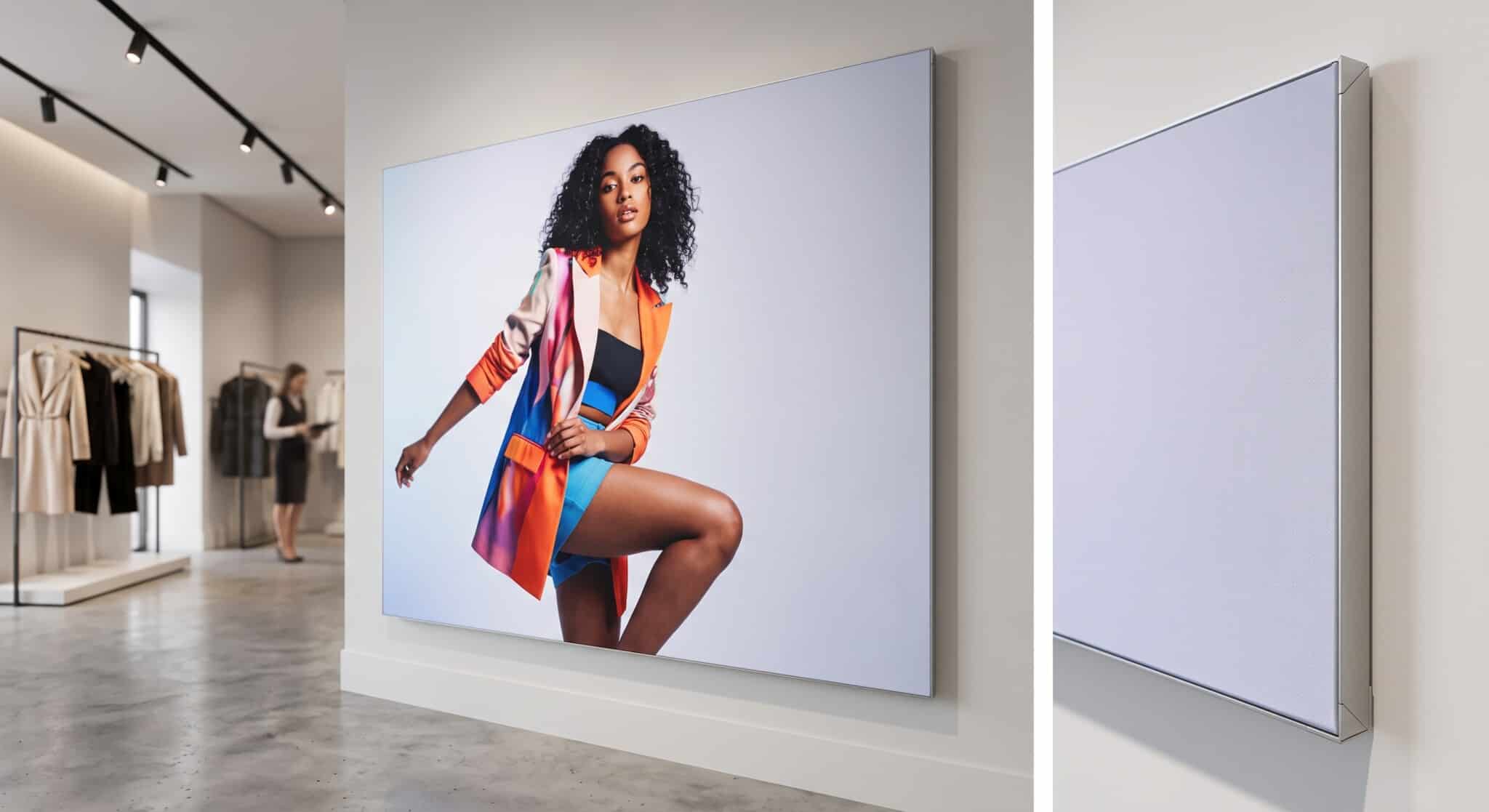
Silicone Edge Graphics, or SEG, is a display system built around a printed fabric panel finished with a thin silicone strip (called a keder) sewn along its perimeter. That strip snaps into a recessed aluminum channel, pulling the fabric drum-tight across the frame with a completely seamless, borderless finish. The result looks less like a “sign” and more like a piece of architecture — which is exactly why SEG has become the default visual standard in flagship retail, corporate lobbies, and trade show halls across the country.
For visual merchandisers, retail designers, and event coordinators working in New York City’s fast-turnaround market, understanding how SEG works — and which configuration fits a given space — is the difference between a display that looks premium for years and one that needs replacing after a single install. If you’re ready to see finished examples, visit our dedicated Trade Show Fabric Displays NYC page.
What Is SEG Tension Fabric? The Mechanics
At its core, an SEG tension fabric graphic is a precision-manufactured textile panel engineered to stretch edge-to-edge across an aluminum frame without a single wrinkle, bubble, or visible border.
How the System Works
The process starts with a high-resolution fabric print, cut slightly oversized to the frame dimensions. A silicone welt (roughly 3mm in diameter) is sewn continuously around the entire perimeter of the panel. That welt is the mechanical key to the entire system: it slides into a recessed groove machined into the aluminum extrusion, and as the installer works around the frame, the fabric is pulled taut from all four sides simultaneously. The tension locks the graphic in place with no clips, no grommets, and no visible hardware — just a clean, edge-to-edge image.
Key Attributes
- Borderless, frameless aesthetic — the silicone channel is recessed, so from a normal viewing distance the graphic appears to float without any visible frame edge.
- Wrinkle-free tension — even tension distribution across all sides eliminates the sagging or rippling common in grommet or pole-pocket banners.
- Drum-tight face — properly fitted SEG fabric produces a perfectly flat printing surface, critical for large-format photography, gradients, and fine typography.
The Print Process: Why Dye-Sublimation Wins
SEG panels are printed almost exclusively using dye-sublimation, not standard UV-cure printing, and the difference matters mechanically, not just cosmetically. In dye-sub printing, ink is transferred as a gas under heat and bonds directly into the polyester fiber itself, becoming part of the fabric rather than sitting on top of it. UV printing, by contrast, cures a layer of ink on the surface of the material — a layer that cracks and flakes when the fabric is stretched, folded, or washed.
Because SEG graphics are stretched under tension and repeatedly folded for storage and shipping, they need a printing method built for flexibility. Dye-sublimation delivers vibrant, fade-resistant, machine-washable color that moves with the fabric instead of fighting it — which is why it’s the industry standard for SEG, backlit walls, and any large-format tension application.
Why Brands Choose SEG Over Traditional Graphics
For a corporate office, retail flagship, or trade show exhibitor, the shift to SEG isn’t cosmetic preference — it solves four operational problems that vinyl and rigid substrates create.
- Glare-free and camera-ready: Matte polyester diffuses light rather than reflecting it, meaning no hot spots under harsh retail track lighting or event photography flashes — a real liability with glossy vinyl or laminated boards.
- Shipping and storage savings: A 10-foot SEG backdrop folds down into a duffel bag or small case instead of a wooden freight crate, cutting both shipping cost and warehouse footprint dramatically.
- Fast, tool-free changeouts: Swapping a graphic is a four-corner insertion job that takes minutes with no specialized labor, no drill, and no downtime for the space.
- Reusable infrastructure: The aluminum extrusion is a permanent, durable investment; only the fabric skin changes for a new campaign, season, or event — lowering the cost of every subsequent refresh.
In-Depth Breakdown: Core Types of SEG Displays
Not all SEG systems serve the same purpose. Choosing the right configuration depends on the space, lighting conditions, and whether the display needs to travel.
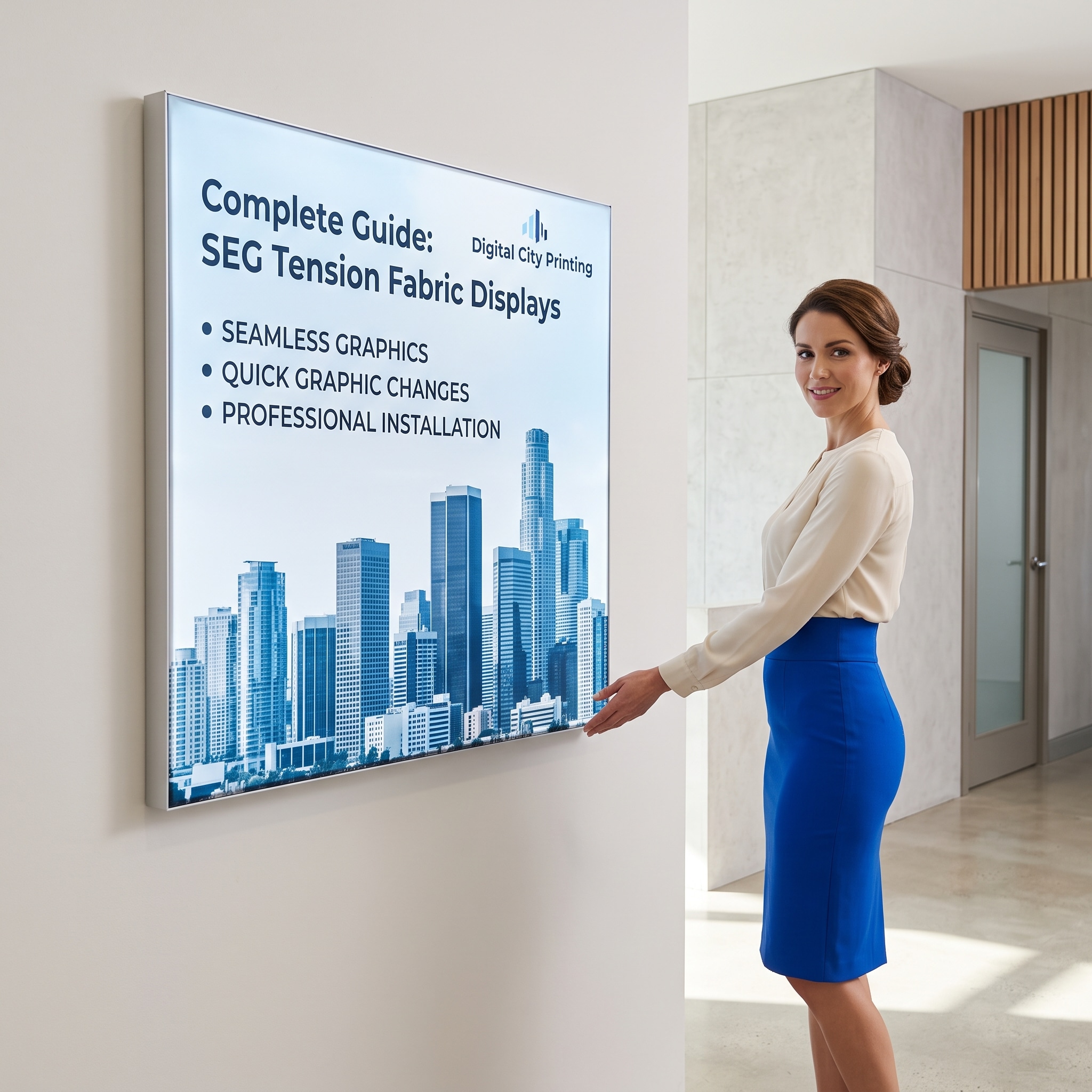
A presenter stands beside a wall-mounted SEG display showing a blue New York skyline, with notes on seamless graphics, quick changes, and professional installation.
Wall-Mounted SEG Frames
These are low-profile aluminum frames that mount flush or near-flush against a wall, functioning as architectural signage rather than freestanding furniture. They’re the go-to solution for office feature walls, conference room branding, reception areas, and retail perimeter walls where floor space is limited. Because the frame recesses only a few inches, wall SEG displays read as a permanent build-out rather than temporary signage.
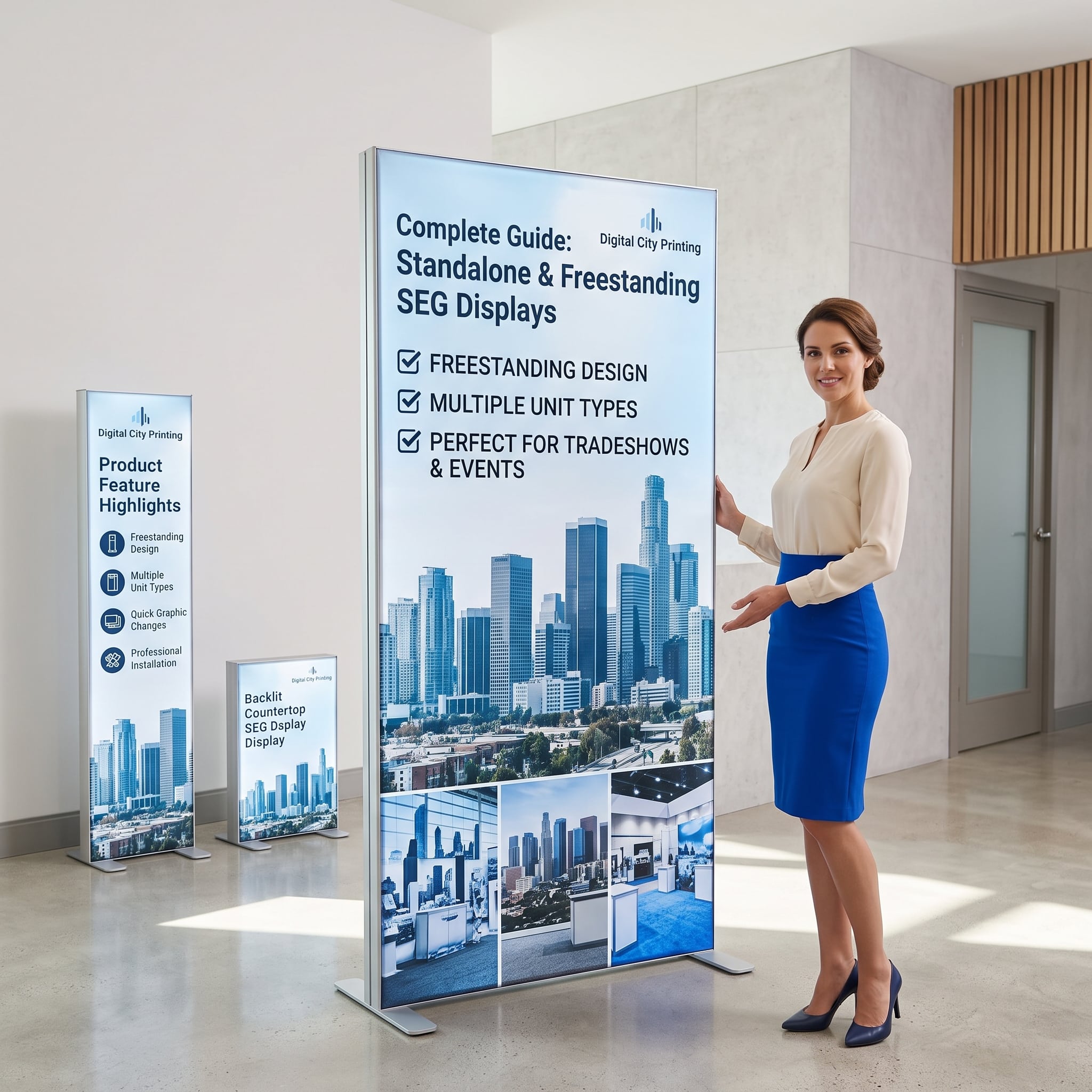
Standalone & Freestanding SEG Displays
Freestanding units use weighted base plates or telescoping support legs so they can be positioned anywhere on a floor without wall anchoring. These standalone SEG frames are common as room dividers, double-sided trade show walls, or registration-desk backdrops. Double-sided freestanding frames print a unique graphic on each face, effectively doubling the display’s usable surface in the same footprint. Browse ready-made configurations on our Pop Up Displays NYC page.
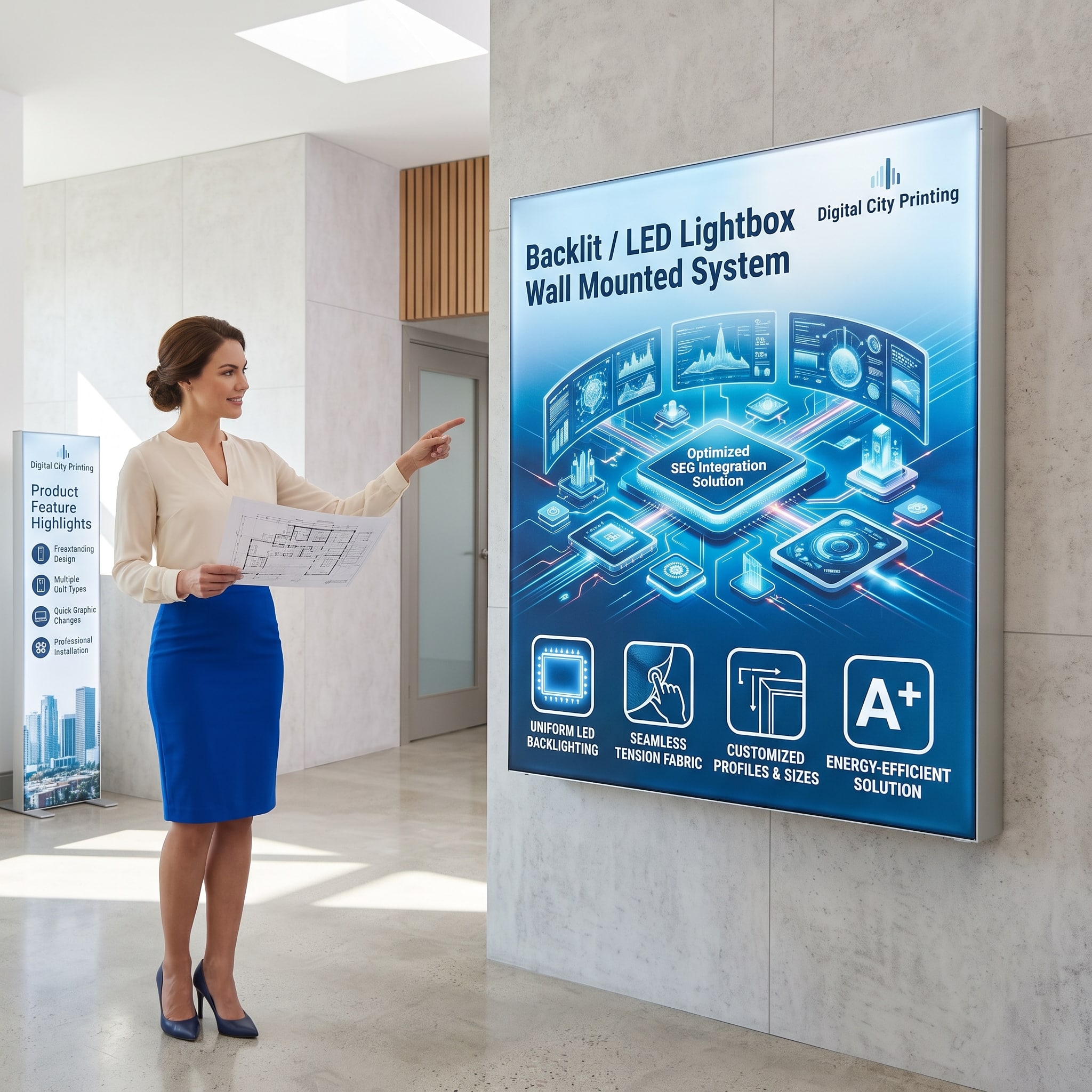
Backlit / LED Lightbox SEG
A backlit SEG lightbox integrates an LED light source behind the fabric to produce a glowing, high-contrast effect — ideal for evening retail hours, dim convention halls, or window-facing storefronts. Two lighting architectures dominate the category:
- Edge-lit systems place LED strips along the frame perimeter, relying on internal light guides to distribute illumination evenly across the panel — typically a thinner, lighter-weight box.
- Perimeter array systems use LED modules arranged across the full depth of the frame for more uniform, higher-output brightness, better suited to larger panels.
Backlit graphics require a special diffusion fabric on the printed face and often a blockout layer behind it to prevent the internal frame structure from showing through as shadows. See our full lineup on the Backlit Display Printing page.
Non-Illuminated (Frontlit) SEG
The simplest and most cost-effective format: a printed tension fabric panel in a standard aluminum frame with no internal lighting. Frontlit SEG is the right call for everyday interior signage — hallway branding, directional wayfinding, product information walls — where the minimalist, elegant look matters more than dramatic illumination.
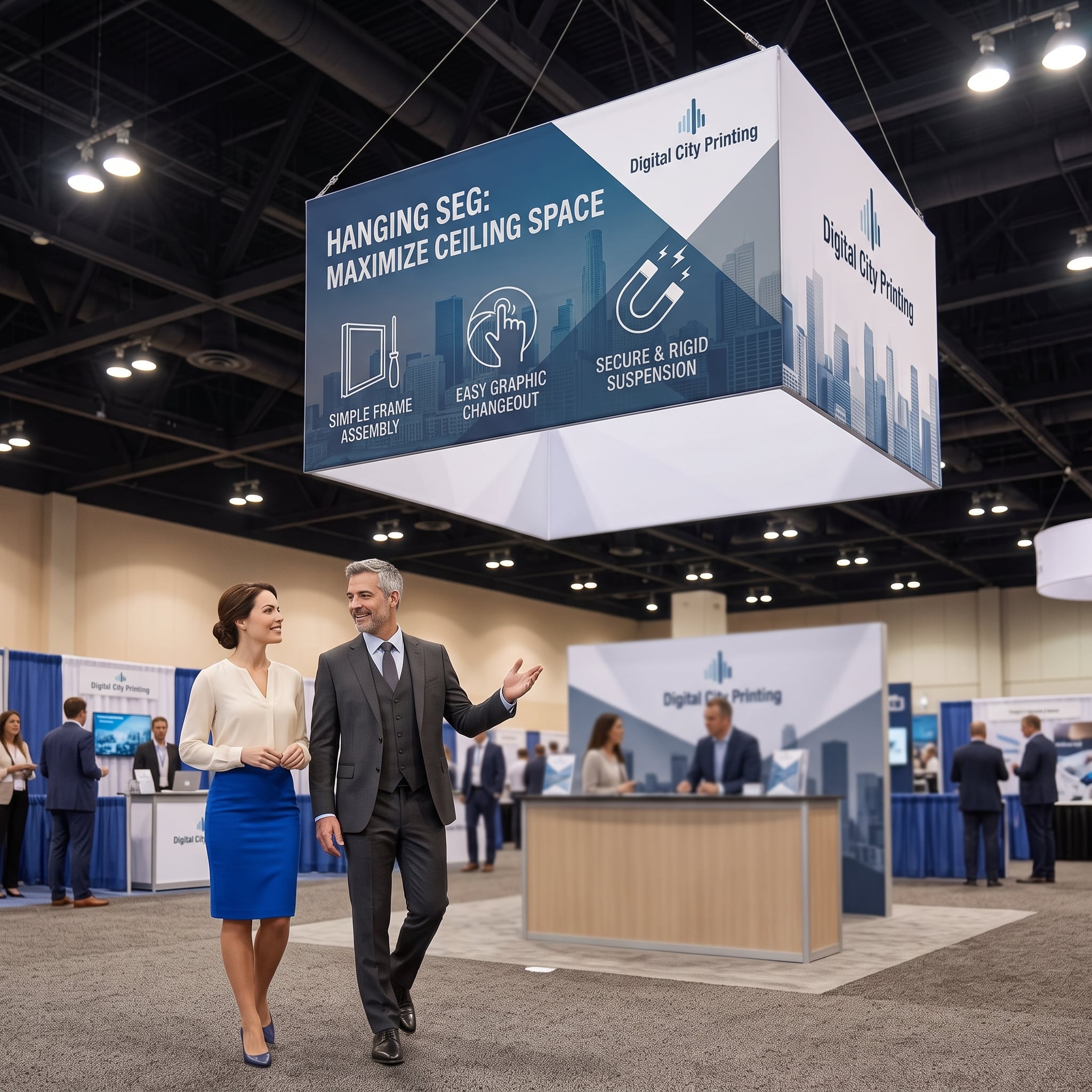
A suspended SEG tension fabric display maximizes ceiling space above the Digital City Printing booth, creating a seamless branded presence at the trade show.
Hanging / Ceiling SEG Structures
Suspended SEG — cubes, rings, curved banners, and multi-sided hanging structures — pulls attention upward in high-ceiling environments like convention centers and department stores. Because these structures are viewed from multiple angles simultaneously, they’re almost always fabricated with double-sided printing applied around the full perimeter of the shape.
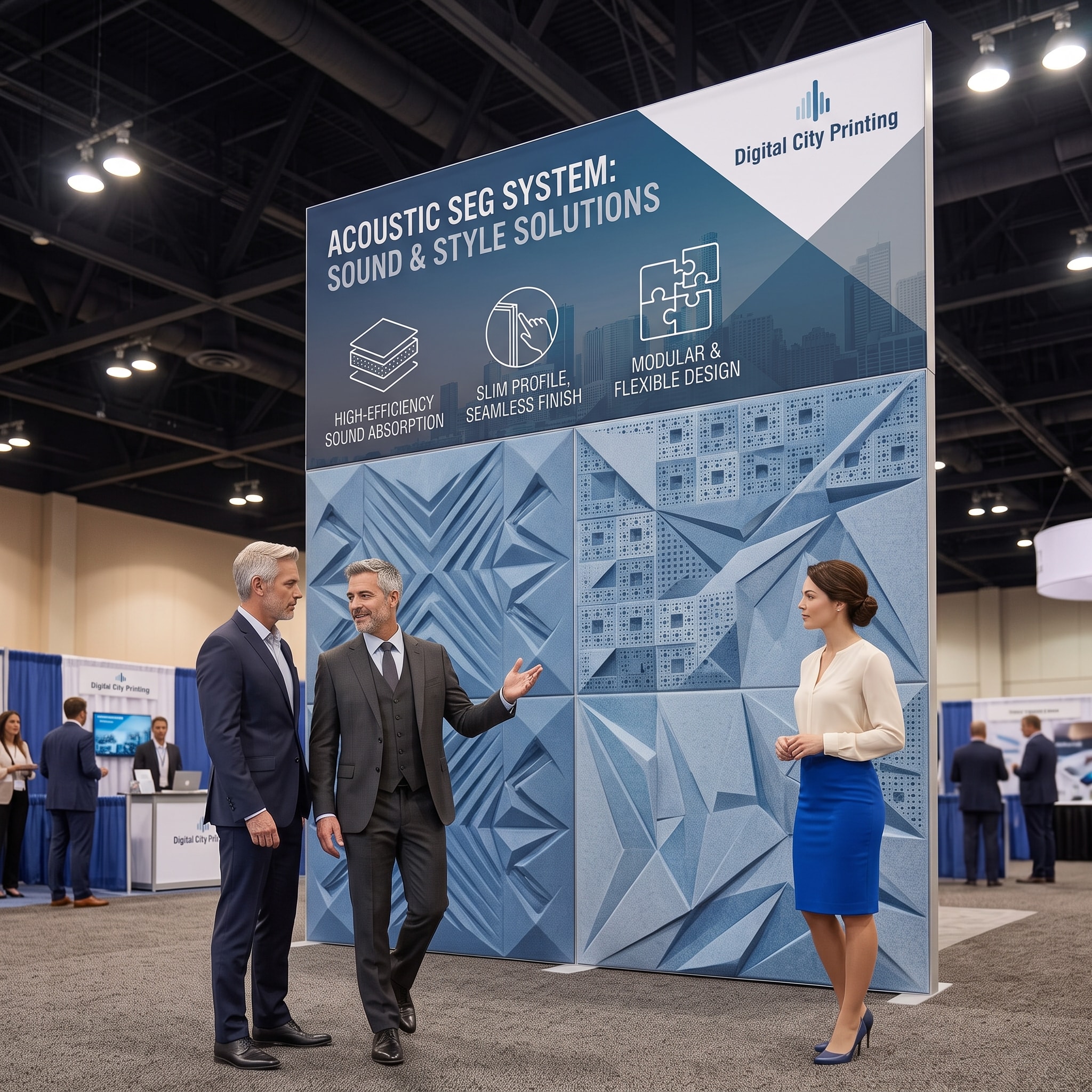
Three professionals discuss an Acoustic SEG System with blue geometric tension fabric, seamless graphics, and Digital City Printing branding at a trade show.
Acoustic SEG Systems
A less obvious but increasingly requested application: acoustic felt panels hidden behind a custom-printed SEG tension face, combining sound-dampening performance with branded visuals. These are popular in open-plan offices and conference rooms where echo control is needed but exposed acoustic panels would clash with the design aesthetic.
SEG Display Types Quick-Reference Table
Type |
Best Use Case |
Illumination |
Graphic Sides |
Portability |
|---|---|---|---|---|
|
Office walls, retail perimeter, corridors | Frontlit or backlit | Single | Fixed / permanent |
|
Trade show booths, room dividers | Frontlit or backlit | Single or double | High (weighted base, foldable) |
|
Storefronts, evening retail, dim venues | Backlit (edge-lit or array) | Single or double | Moderate (heavier due to LEDs) |
|
Everyday interior signage, wayfinding | None | Single | Moderate |
|
Convention centers, department stores | Frontlit or backlit | Multi-sided | Low (rigged installation) |
|
Open offices, conference rooms | Frontlit | Single | Fixed / permanent |
Fabric Substrates & Finishing Options
The frame gets the attention, but the fabric substrate is what determines print quality, durability, and lighting performance.
- Frontlit stretch polyester — a standard woven or knit polyester engineered for four-way stretch, optimized for dye-sub ink saturation and color vibrancy without any light-transmission requirement.
- Backlit diffuser fabrics — a specialized weave designed to scatter LED light evenly across the face, minimizing visible seams or hot spots while still holding sharp print detail.
- Opaque blockout fabrics — used as a backing layer behind backlit graphics (or on double-sided displays) to prevent bleed-through between two printed faces or from ambient light behind the frame.
Silicone keder specifications matter more than most buyers realize. The welt diameter — typically around 3mm — must match the frame’s channel tolerance precisely; a welt that’s undersized will pop out under tension, while an oversized welt won’t seat properly and creates visible puckering at the edge. Equally important is corner stitching precision: the four corners of the panel see the highest stress concentration during installation, and a fabricator’s stitch quality there determines whether the graphic holds its shape after dozens of install-and-strike cycles.
Step-by-Step Graphic Installation & Maintenance
SEG’s biggest operational advantage — tool-free installation — only pays off if it’s done correctly. Skipping the proper sequence is the most common cause of skewed, off-center, or wrinkled graphics.
- Locate the starting corner. Begin insertion at one corner of the frame, seating a few inches of silicone welt into the channel before moving on.
- Work opposite corners next — the “Four-Corner” technique. Rather than tracing one side at a time, secure all four corners first, in a crossing pattern (top-left, then bottom-right, then top-right, then bottom-left). This distributes tension evenly and prevents the fabric from skewing diagonally.
- Fill in the sides. Once all four corners are anchored, work along each edge from the center outward, pressing the welt fully into the recessed channel.
- Check tension uniformity. Run a hand across the face; any remaining slack or wrinkle usually traces back to one corner not being fully seated — recheck it before moving on.
For maintenance, most dye-sublimated SEG fabrics can be gently machine washed or hand washed in cold water and air-dried, restoring color vibrancy without damaging the print. Light creasing from folded storage typically releases with a low-heat steam pass — never a direct iron, which can scorch polyester or distort the silicone welt. Between uses, fold graphics along their factory crease lines and store them flat or loosely rolled in a garment bag rather than compressed tightly, which prevents permanent creasing at non-factory fold points.
Why Choose Digital City Printing for NYC SEG Fabrication
Digital City Printing operates a dedicated Midtown Manhattan production facility at 519 8th Avenue, which means corporate clients and event coordinators across the five boroughs get same-day or next-day pickup instead of waiting on freight from an out-of-state fabricator — a meaningful advantage when a trade show floor date or a retail launch can’t slip.
Every SEG graphic we produce runs through G7-calibrated wide-format printing, the industry benchmark for gray balance and color accuracy. That calibration matters most when a client’s brand color has to match exactly across multiple panels, multiple display types, or a printed graphic sitting next to a physical product on a retail floor.
Beyond printing, we manufacture custom aluminum frames cut to exact architectural measurements — not off-the-shelf sizes forced to fit a space. See how we apply this to full exhibitor kits on our Trade Show Fabric Displays NYC page, or explore portable hardware options on our Banner Stands & Hardware page.
Ready to Upgrade Your Space?
Tension fabric printing NYC buyers rely on Digital City Printing for one reason: we control the entire production chain — fabric, print, and frame — under one Midtown roof, with the turnaround speed New York’s retail and event calendar demands.
If your retail perimeter, lobby, or next trade show booth is still running on rigid signage or vinyl banners, an SEG upgrade pays for itself in shipping savings and changeout speed within a season or two.
Ready to Start Your NYC Printing Project?
"Quality Printing Perfected. NYC Speed Guaranteed."
“Connect with our printing specialists today for a complimentary consultation and a same-day quote.”